
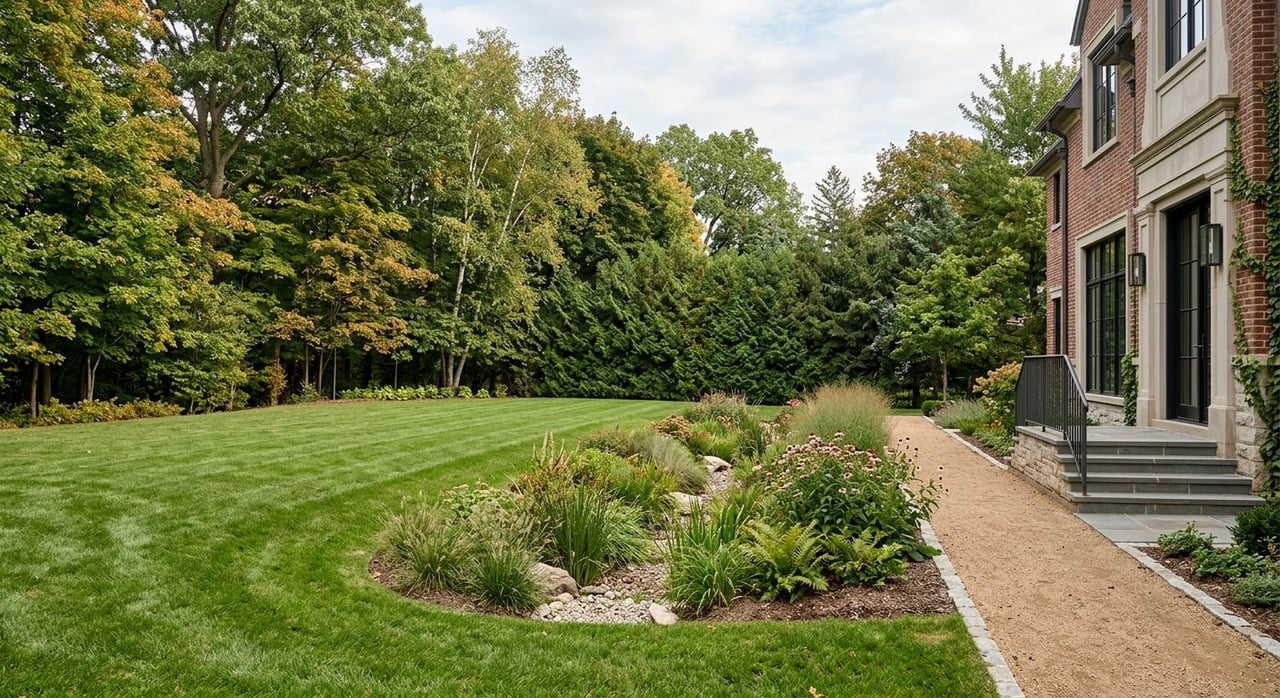
Looking at a large-lot home in Mazza Woods? The acreage number can be impressive, but that number alone does not tell you how the property will actually live. If you want privacy, outdoor space, or room to improve the property over time, you need to know what part of the lot is truly usable and what part is limited by zoning, topography, trees, drainage, or utility constraints. That is where careful due diligence matters. Let’s dive in.
Start With Usable Acreage
In Mazza Woods, the better question is not “How big is the lot?” It is “How much of the lot can you realistically use?” Montgomery Planning describes the broader Potomac subregion as an area that grew from rural and agricultural land into a semi-rural and suburban setting while keeping much of its green character and environmental quality.
That setting is part of the appeal, but it also means a large parcel may not function like a wide-open blank slate. Some areas may be steep, wooded, buffered, or otherwise constrained. When you compare homes, focus on the portion of the land that supports the way you want to live.
Verify Zoning First
Before you assume you can add onto the house, rework the driveway, or create more outdoor living space, verify the zoning. Montgomery Planning’s digital zoning map and Zoning Explorer are the county’s authoritative references, and overlay districts can change the standards that apply to a property.
This matters because a lot that looks flexible from the street may have limits that affect future plans. If you are evaluating two similar homes in Mazza Woods, the one with the more favorable zoning and fewer overlay constraints may offer more long-term value.
Use Parcel Records As A Starting Point
Maryland SDAT’s Real Property Data Search can help you confirm basic parcel details such as subdivision name, map numbers, and property records. It is useful for early review, but SDAT states that its records are for reference and are not a legal determination of what a lot can support.
That distinction is important. Public records can help you organize your research, but zoning and site-specific conditions drive the real answer.
Study The Site, Not Just The House
A large-lot purchase should be evaluated from the ground up. In a historical planning review tied to Mazza Woods, Montgomery Planning called for soils information, drainage-area maps, tree-save data, natural resources inventory mapping, floodplain information, grading details, and driveway information.
That record is a useful reminder that in this neighborhood, site conditions have long mattered. The house may be the centerpiece, but the lot is often what determines whether the property feels easy, expensive, or restrictive to own over time.
Look Closely At Slope And Drainage
Topography affects more than appearance. A gently rolling yard may feel attractive, but if water collects in key areas or the site drops sharply behind the house, your options for outdoor use may narrow.
Pay attention to where the land is flat, where it slopes, and where drainage patterns may affect usability. If you are imagining a pool, expanded terrace, play lawn, or future addition, those plans depend on how the site handles water and grade.
Mature Trees Can Add Beauty And Limits
Wooded estate lots often offer privacy and setting, which is a major reason buyers are drawn to areas like Mazza Woods. At the same time, mature trees may be subject to forest conservation considerations, and clearing or redesign work may be more limited than expected.
Montgomery Planning notes that Forest Conservation Plans can govern how areas are retained, protected, reforested, or afforested. If a property includes protected areas or mapped easements, that land should be treated as part of the lot but not necessarily part of the lot you can freely reshape.
Understand Easements And Environmental Buffers
One of the most common mistakes buyers make with large lots is assuming that every square foot carries the same practical value. It does not. Forest conservation easements can limit what owners may do on private land, particularly where forests, streams, wetlands, or similar features are involved.
Montgomery Planning also notes that violations can trigger a lengthy process that may include amended plans, plat updates, and possible off-site mitigation. In practical terms, any easement or protected area should be viewed as a material limit on usable acreage.
Streams, Wetlands, Floodplains, And Slopes
Environmental buffers can affect how much room you actually have for future improvements. Montgomery Planning points out that streams, wetlands, floodplains, and slopes play an important role in absorbing floodwaters and protecting property.
For buyers, that means a parcel may feel much smaller once those constraints are mapped. Even if the lot appears generous, your real living area may be concentrated in a smaller, more buildable portion of the site.
Flood Screening Still Matters
Do not skip flood screening just because a lot feels wooded, private, or elevated. Montgomery Planning says the county is actively identifying flood hazard areas and working to reduce flood risk, and FEMA remains the official source for flood hazard mapping products.
A flood review is not only about obvious water exposure. It is also about understanding whether portions of the lot may be harder to improve, insure, or use the way you intend.
Evaluate The Driveway As Part Of The Property
On large lots, the driveway is often a major feature. It shapes first impressions, privacy, parking, and access. It can also affect permits, front lot coverage, and future improvement costs.
Montgomery County requires a driveway permit for certain new apron work, temporary construction entrances, and restoration or repair of an existing apron. If there is no existing entrance and access is needed from a county roadway, a permit is required for construction over 1,000 square feet.
Widening A Driveway Is Not Always Simple
If you want to widen a driveway or add parking, check front lot coverage limits first. Montgomery County specifically advises property owners to review the zoning ordinance for allowed front lot coverage when expanding a drive aisle or building a parking pad.
If roadside trees are affected, additional review may be needed. The county also notes that a roadside tree protection plan may be required, and removing a roadside tree requires a Maryland Department of Natural Resources Tree Care Permit.
Review Outdoor Improvement Potential
With large-lot homes, buyers often think beyond the current house. You may be considering a pool, guest structure, larger deck, retaining walls, fencing, or expanded hardscaping. Those ideas should be part of your evaluation before you buy, not after.
Montgomery County says permits are likely required for projects such as accessory structures, additions, decks, fences, hot tubs, retaining walls, sheds, swimming pools, and land disturbance greater than 5,000 square feet or 100 cubic yards of earth movement. In other words, future flexibility is not just about available land. It is also about what the site and permitting framework will realistically allow.
Confirm Water And Sewer Service
Utility type can significantly affect how a large-lot home functions. Montgomery County provides centralized public water and sewer through WSSC Water and local municipalities, but some properties may use private systems instead.
Before you compare one Mazza Woods property to another, confirm whether the home is on public water and sewer or on private well and septic. That answer can affect maintenance responsibilities, expansion options, and long-term planning.
If The Property Has A Well
Montgomery County requires a well permit before drilling, and a state drilling permit is also required. For a new home, the county says a Certificate of Potability sampling step is needed before a Use and Occupancy permit is issued.
For a buyer, the key point is simple: if a property relies on a well, understand the existing documentation and how that utility setup fits your plans.
If The Property Has A Septic System
If a home uses septic, the owner is effectively responsible for operating, maintaining, and eventually replacing that system. Montgomery County also notes that some additions depend on records for the system, percolation testing, documented septic tank location, and adequate reserve area.
That can become highly relevant if you want to expand the house. On a large lot, it is easy to assume there is plenty of room, but septic reserve requirements may limit what is actually feasible.
Watch Carrying Costs Too
Large lots do not just change lifestyle. They can also affect recurring costs. In Montgomery County, the Water Quality Protection Charge is based on impervious surface.
The county states that one Equivalent Residential Unit equals 2,406 square feet of impervious area, and the levy-year 2025 rate is $147 per ERU for the period from July 1, 2025 through June 30, 2026. That means large driveways, parking courts, patios, and pool surrounds may influence carrying costs even when the parcel itself is expansive.
A Practical Mazza Woods Checklist
When you compare large-lot homes in Mazza Woods, keep your review disciplined. The goal is to separate paper acreage from usable acreage.
Use this checklist as you evaluate each property:
- Verify the exact zoning and any overlay districts
- Confirm parcel details through SDAT as a reference point
- Identify flat, functional outdoor space versus steep or constrained areas
- Review drainage patterns, low spots, and grading conditions
- Check for streams, wetlands, floodplain concerns, and protected slopes
- Look for forest conservation areas, tree-save zones, and easements
- Evaluate driveway access, geometry, and any likely permit issues
- Confirm whether water and sewer are public or private
- If septic is present, review reserve area and expansion implications
- Estimate how impervious surfaces may affect ongoing costs
Why A Large-Lot Home Needs A More Careful Lens
Mazza Woods should be approached as a due-diligence market, not just a lot-size market. The strongest purchase is not always the one with the biggest acreage figure. It is the one that gives you compliant access, practical outdoor living, and realistic room to adapt over time.
That kind of analysis is especially important in Potomac-area upper-tier property, where privacy, setting, and long-term flexibility often matter as much as the house itself. If you are evaluating Mazza Woods, a measured review at the front end can help you avoid expensive assumptions later.
If you want a disciplined second opinion on a Mazza Woods property, Ted Duncan offers direct, strategy-led guidance grounded in long local experience and a careful reading of what makes a property work in practice.
FAQs
How should you evaluate lot size for a Mazza Woods home?
- Focus on usable acreage rather than total acreage. Zoning, overlays, easements, slope, drainage, trees, and environmental buffers can all reduce how much of the parcel you can realistically use.
What zoning details matter for a large-lot home in Mazza Woods?
- You should verify the exact zoning and any overlay districts using Montgomery Planning’s official zoning tools, because those rules may affect additions, redevelopment, driveway changes, and other future plans.
Why do trees and wooded areas matter on a Mazza Woods property?
- Mature trees can improve privacy and setting, but they may also be tied to forest conservation requirements or easements that limit clearing and site changes.
What should you check about a driveway at a Mazza Woods home?
- Review access, width, front lot coverage limits, and whether future changes may require permits. Driveway work can also involve roadside tree review.
How do utilities affect a large-lot home purchase in Mazza Woods?
- You should confirm whether the home uses public water and sewer or private well and septic, because that can affect maintenance responsibility, addition potential, and long-term flexibility.
Can impervious surfaces affect costs for a Mazza Woods property?
- Yes. Montgomery County’s Water Quality Protection Charge is based on impervious surface, so features like large driveways, patios, and pool decks may affect carrying costs.