If you picture estate-style living as a huge house alone, Potomac tells a more complete story. Here, the lifestyle is shaped just as much by land, setbacks, mature trees, and privacy as it is by square footage. If you are trying to understand what makes Potomac feel distinct from other DC-area suburbs, this guide will show you what that looks like in practice and how to evaluate whether it fits the way you want to live. Let’s dive in.
Estate-Style Living Starts With Land
In Potomac, estate-style living is fundamentally about space around the home. Montgomery Planning describes the area as having evolved from rural and agricultural roots into a semi-rural and suburban community that still retains much of its green character. That planning context matters because it helps explain why so many homes feel set into the landscape rather than packed tightly together.
You see that pattern clearly in the zoning. Montgomery County’s residential estate districts set a low-density baseline, with RE-1 requiring a minimum lot area of 40,000 square feet and RE-2 requiring 2 acres. Those standards support the kind of separation, depth, and openness that many buyers associate with estate properties.
The building envelope reinforces that feeling. In RE-1, detached homes have a 50-foot front setback, 17-foot side setbacks, and a 35-foot rear setback, with lot coverage capped at 15 percent. RE-2 also uses generous setbacks and limits how much of the parcel can be covered, which helps preserve long sightlines and open yard space.
Why Potomac Feels Private
Privacy in Potomac is often built into the lot itself. Large parcels, deeper setbacks, and controlled accessory structures mean the house typically sits with breathing room around it. Instead of relying on fencing or screening alone, the site plan does much of the work.
Mature landscaping adds to that effect. The 20854 housing stock is established rather than uniformly new, with many homes built in the 1960s, 1970s, 1980s, and 1990s. That history helps create the settled, tree-filled setting that many buyers notice immediately when they drive through Potomac.
This is also a market dominated by detached housing. In the latest ACS 5-year estimates for 20854, 82.4 percent of housing units are 1-unit detached, and 89.4 percent of occupied units are owner-occupied. Together, those numbers support the idea of Potomac as a long-term, low-density residential market rather than a faster-turnover, higher-density one.
Architecture Is Varied, but the Feel Is Consistent
One of the most important things to understand is that Potomac does not have one single estate-house look. The estate feeling comes less from a fixed architectural style and more from the relationship between the home and the land. That is why buyers can find very different exteriors but still feel the same sense of privacy and space.
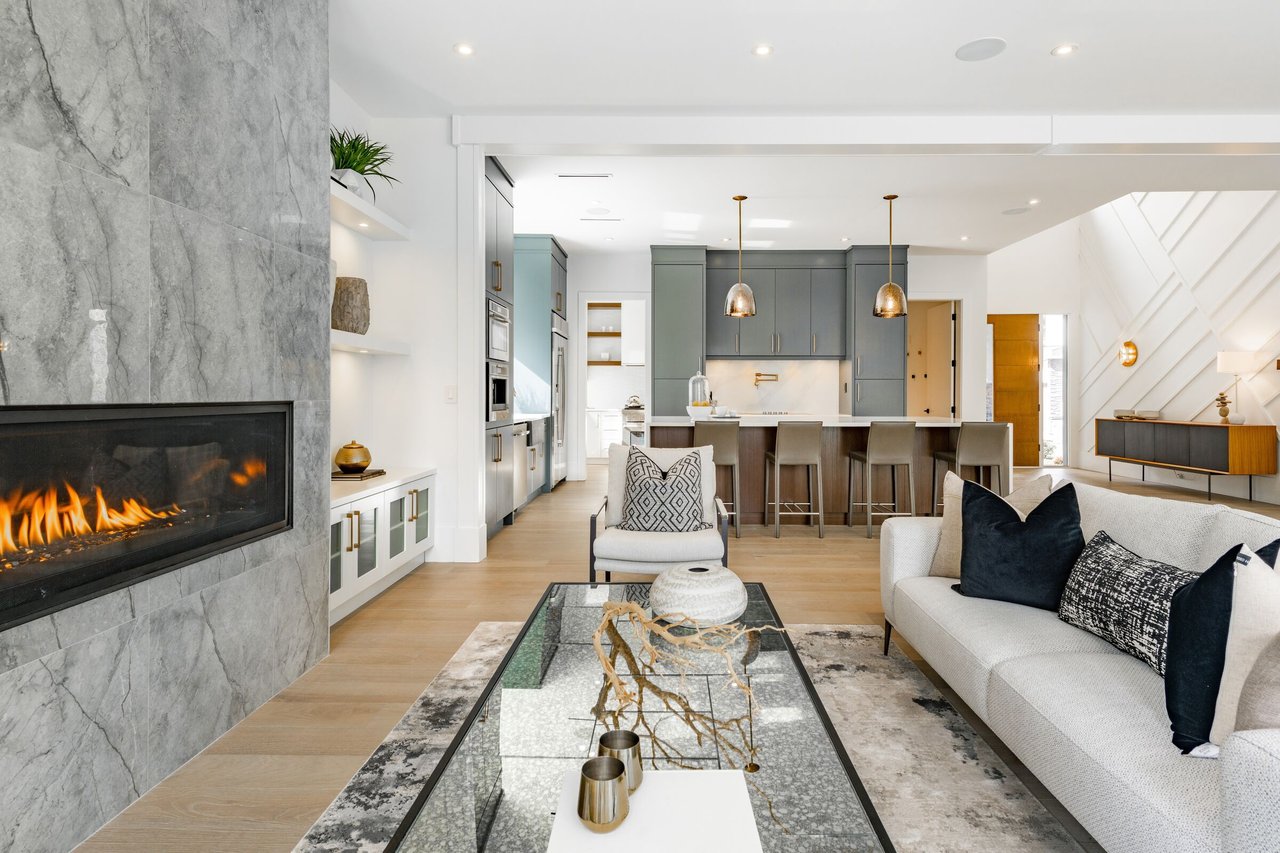
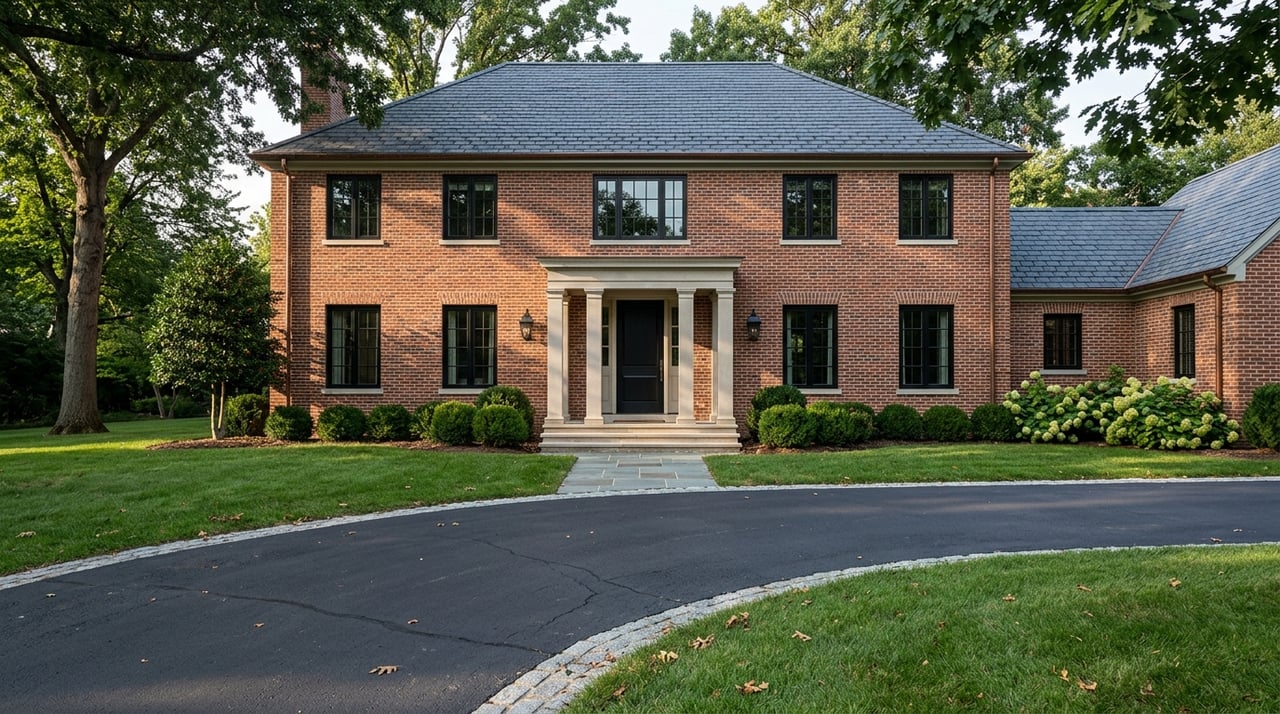
In some parts of Potomac, you will see classic brick Colonials on sizable lots. In others, you may find contemporary rebuilds, circular driveways, wooded settings, or mid-century modern influences. Montgomery Planning’s Potomac Overlook example also shows how wooded, sloping lots and secluded streets can create an estate-like setting even in smaller tucked-away enclaves.
The practical takeaway is simple. When you evaluate estate-style living in Potomac, pay close attention to lot size, setback depth, tree cover, driveway placement, and how the house sits on the site. Those details often matter more than whether the façade is traditional or modern.
What Daily Life Looks Like in Potomac
Estate-style living in Potomac usually comes with a quieter residential experience, but it also comes with a more car-based routine. This is not a walk-everywhere town-center suburb. Instead, daily life often means leaving a private residential setting for errands, recreation, or commuting.
The data supports that pattern. In the latest ACS figures for 20854, 53.6 percent of workers drove alone, 36.9 percent worked from home, and the mean travel time to work was 29.6 minutes. For many households, that means Potomac supports a mix of commuting and at-home professional life, with space at home playing a meaningful role in day-to-day comfort.
Potomac Village remains the commercial heart of the area. Montgomery Planning’s 2024 reality-check report describes it as centered around Falls and River Roads and notes that it functions more like a suburban intersection than a fully pedestrian-oriented mixed-use center. If you are considering Potomac, that helps set the right expectation for how errands and daily convenience typically work.
Recreation Is Part of the Lifestyle
Space at home is only one part of the appeal. Potomac also offers access to significant outdoor recreation, which adds another layer to the estate-style experience. If you value room to spread out both at home and nearby, this is an important part of the picture.
The Chesapeake and Ohio Canal National Historical Park runs along the Potomac River, and the Great Falls Tavern Visitor Center is located in Potomac. Cabin John Regional Park offers more than five miles of hiking and biking trails, along with playgrounds, a dog park, a miniature train, and an ice rink. Potomac Community Neighborhood Park on Falls Road adds lighted tennis courts and a lighted ballfield.
For many buyers, this combination matters. You may not be choosing Potomac for an urban main-street experience. You may be choosing it because it offers a private residential setting with meaningful access to parks, trails, and outdoor spaces.
Potomac Appeals to Long-Term Buyers
Potomac’s housing profile points to a market with strong long-term ownership patterns. The 2020 Census profile for 20854 reported 50,698 residents and 17,101 households, with 89.0 percent owner-occupied housing. The same ACS profile reports median household income at $250,000+ and mean household income of $341,063.
That does not tell you whether a specific block or property is right for you, but it does help explain the market’s overall tone. Potomac tends to attract buyers looking for stability, space, and a home that can serve them well over time. The estate-style appeal is often tied to that long-hold mindset.
Families are also a notable part of the market profile. According to the ACS data, 38.7 percent of households include children under 18, and the average family size is 3.27. For a relocating buyer, that helps frame Potomac as a place where people often make decisions with long-term household needs in mind.
School Boundaries Require Address-Specific Review
If schools are part of your decision, it is important to stay precise. Montgomery County Public Schools states that its school assignment tool and service-area maps are based on county address data, updated quarterly from Montgomery County GIS, and that boundaries may change by Board of Education mandate.
That means you should treat school assignment as property-specific, not neighborhood-wide. Two homes that seem close together may not always share the same assignment pattern. When you are narrowing options in Potomac, this is one of the details worth confirming early.
How Potomac Compares to Other DC-Area Suburbs
Compared with denser inner-ring suburbs, Potomac reads as more land-rich and more private. The combination of estate zoning, high detached-home share, mature housing stock, and planning emphasis on environmental quality supports a different lifestyle than you would find in a more walkable town-center market.
The tradeoff is straightforward. You generally gain more space, more separation between homes, and a more established residential setting. In exchange, you are more likely to depend on the car for errands and routine daily movement.
For many buyers, that is exactly the point. Potomac is often less about novelty and more about stability, privacy, and a setting that feels grounded. If that is what you want from the next move, estate-style living here can be a strong fit.
What Buyers Should Evaluate Carefully
If you are seriously considering Potomac, it helps to look beyond the headline features of a home. A large house alone does not create estate-style living. The site, the layout, and the daily rhythm of the property all matter.
Focus on factors like:
- Lot size and usable outdoor area
- Setback depth and spacing from neighboring homes
- Tree cover and natural screening
- Driveway approach and how the home sits from the street
- Architectural style in relation to the site
- Commute patterns and errand convenience
- Address-specific school assignment if relevant to your search
In Potomac’s upper-tier market, the right fit is usually about more than finishes. It is about whether the property supports the level of privacy, space, and long-term function you want.
A careful process matters on the sell side too. For owners of unique homes on strong lots, pricing, preparation, and showing strategy should reflect what buyers are actually responding to, not just broad market averages. In a market like Potomac, nuanced differences in site planning, privacy, and condition can shape buyer behavior in meaningful ways.
If you are weighing a purchase or preparing to sell in Potomac, a disciplined local read is what protects your decision-making. That is especially true when the property is competing on land, privacy, and lifestyle as much as on the house itself.
If you want a clear, discreet conversation about how a specific property fits Potomac’s estate-style market, Ted Duncan can help you evaluate the details with a strategy-first approach.
FAQs
What does estate-style living in Potomac usually mean?
- It usually means a detached home on a generous lot with deeper setbacks, mature landscaping, and more privacy between homes than you would find in denser suburbs.
How large are estate lots in Potomac?
- In Montgomery County’s estate residential zones, RE-1 requires a minimum lot area of 40,000 square feet, while RE-2 requires 2 acres.
Is Potomac a walkable town-center suburb?
- Potomac Village serves as the commercial core, but Montgomery Planning describes it as functioning more like a suburban intersection than a fully pedestrian-oriented mixed-use center.
What types of homes create the estate feel in Potomac?
- Potomac includes a mix of architectural styles, including brick Colonials, contemporary rebuilds, and some mid-century modern influences, but the estate feel is driven more by the lot and site plan than by one specific style.
What is the housing profile in Potomac’s 20854 area?
- The latest ACS 5-year estimates show that 82.4 percent of housing units are 1-unit detached, 89.4 percent of occupied units are owner-occupied, and the median value of an owner-occupied home is $1,165,400.
How should buyers verify school assignments in Potomac?
- MCPS says school assignments are based on address-specific data and may change over time, so buyers should confirm the assignment for the exact property they are considering.